


Overview
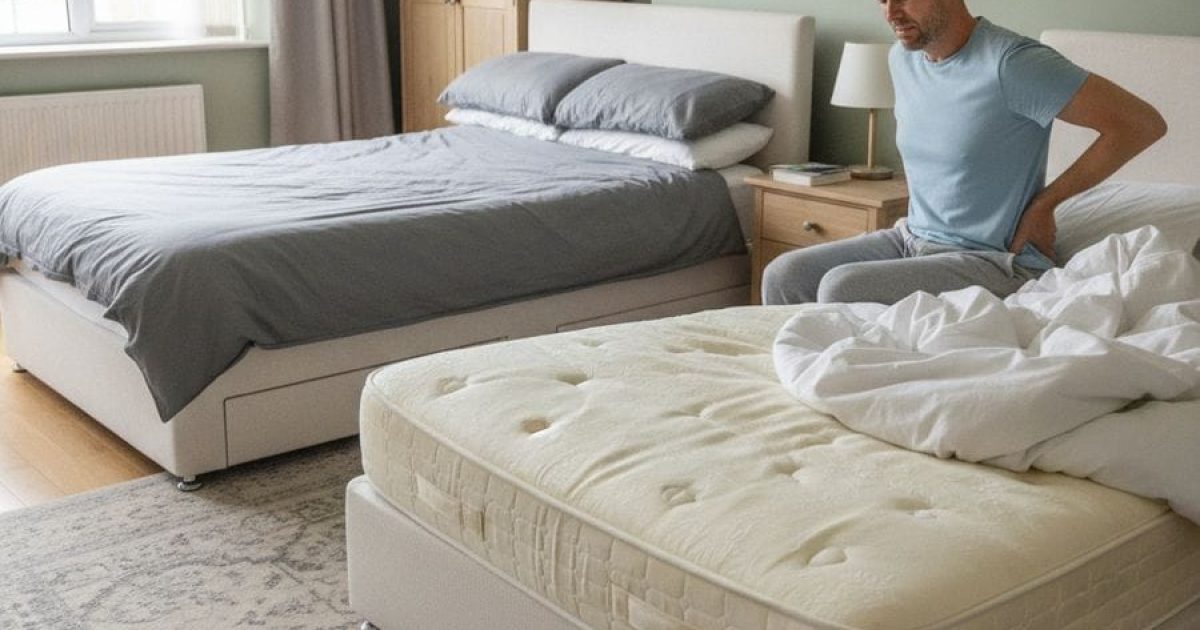
Many shoppers understandably look for a budget mattress when furnishing a bedroom, moving home, or replacing an old bed without overspending. In the UK, lower prices do not automatically mean poor quality. However, when a mattress cuts too many corners on support, fillings, or construction, cheap mattress back pain can become a real concern.
Your mattress plays a major role in how your body recovers overnight. A good back pain mattress should help distribute weight evenly, reduce pressure points, and keep the spine in a more neutral position. If the surface sags, dips, or feels unstable, muscles can stay tense for hours while you sleep, which may leave you waking up stiff and uncomfortable.
A low price is not the problem by itself — poor support is what usually causes trouble for your back.
For many people, the issue is not whether a mattress is cheap, but whether it is supportive enough for their body weight, sleep position, and comfort needs. A carefully made orthopaedic mattress or firm model can still offer excellent value if it provides proper structure and lasting support. The key is knowing what to look for before buying, especially if back pain is already part of your daily life.
Why Poor Support Affects Spinal Alignment
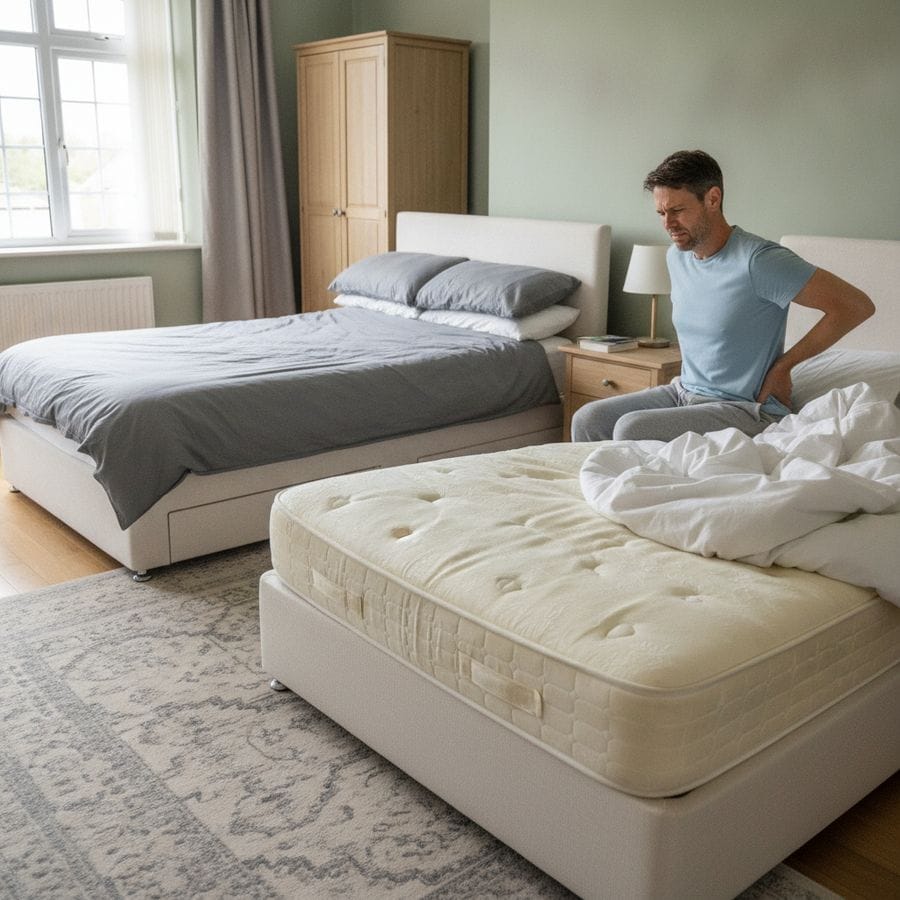
Your spine has natural curves that need steady, balanced support throughout the night. When a mattress is too soft, uneven, or worn in key areas, heavier parts of the body such as the hips and shoulders may sink too deeply. That can pull the spine out of alignment and place strain on the lower back, upper back, and neck.
This is one reason a poor-quality budget mattress can make existing discomfort worse. Instead of allowing the body to rest in a neutral posture, it forces muscles and joints to compensate. Over time, that can lead to morning aches, interrupted sleep, and a feeling that your body has not properly recovered.
Different sleeping positions are affected in different ways. Side sleepers may feel pressure around the shoulders and hips, while back sleepers often notice the lower spine dipping too far. Front sleepers are particularly vulnerable if the midsection sinks into the mattress.
Sagging centres can strain the lower back
Weak edges may reduce stability and usable sleep space
Thin comfort layers can increase pressure points
Low-density fillings often lose shape quickly
A truly supportive mattress helps keep the body level rather than letting it collapse into the bed.
Signs a Budget Mattress Lacks Support
Not every affordable mattress is a bad choice, but there are clear warning signs when a model is not doing your back any favours. If you wake up with stiffness that improves once you start moving, your mattress may not be supporting you properly overnight. The same applies if you feel like you are rolling into the middle or sleeping in a visible dip.
Another sign of cheap mattress back pain is when the mattress feels comfortable for a few minutes but uncomfortable after several hours. This usually points to materials that feel plush at first yet fail to hold the body in the right position through the night. Excessive motion transfer and poor edge support can also suggest weaker internal construction.
If a mattress loses its shape quickly, your spine often pays the price before the fabric shows obvious wear.
Practical signs to watch for include:
Noticeable sagging or body impressions
Springs that can be felt through the surface
Noisy movement or creaking when turning over
Uneven firmness across different parts of the bed
Worsening aches despite a consistent sleep routine
If these issues sound familiar, your current back pain mattress may not be giving your body the support it needs.
Firmness Levels for Back Pain Relief
Many people assume the firmest mattress is always the best option for back pain, but that is not necessarily true. What matters most is finding the right balance between support and comfort. A mattress that is too soft may allow the spine to dip, while one that is too hard may create pressure points and stop the body from settling naturally.
For many adults, a medium-firm to firm supportive mattress works well, especially for back and combination sleepers. Side sleepers often need enough cushioning at the shoulders and hips while still maintaining alignment through the centre of the body. Heavier sleepers may also benefit from a firmer feel that resists deep sinkage over time.
An orthopaedic mattress is often designed with this in mind, aiming to provide a steadier sleep surface for those who need extra support. However, the label alone is not enough; the actual build quality matters just as much as the firmness rating.
Soft: better for plush comfort, but may lack support for some sleepers
Medium-firm: a popular all-round choice for balanced comfort and alignment
Firm: often suitable for those wanting stronger support and less sinkage
The best back pain mattress is the one that keeps your spine aligned without making you feel stiff or pressured.
Orthopaedic Mattress Features That Matter
When comparing mattress options, it helps to look beyond marketing language and focus on features that genuinely affect support. A quality orthopaedic mattress should offer consistent structure across the full sleep surface, helping the body stay better aligned night after night.
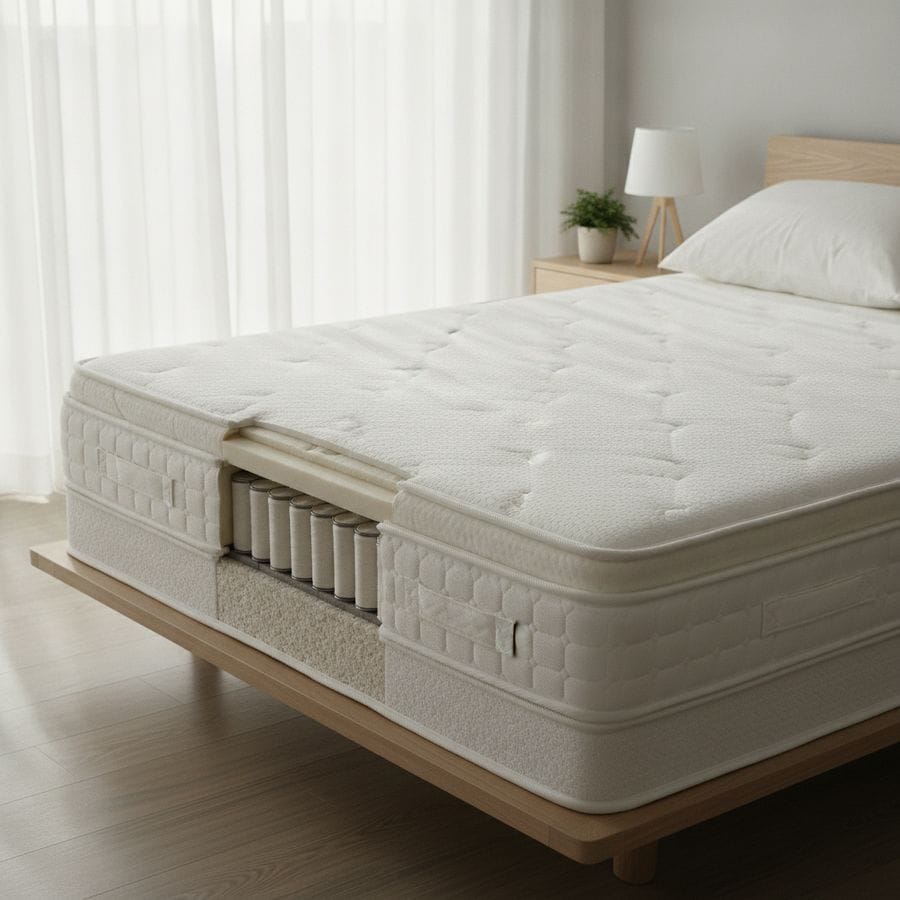
Support layers are one of the most important details. Whether the mattress uses springs, reflex foam, or a hybrid design, the core should be strong enough to prevent sagging and maintain shape. Comfort layers also matter because support without pressure relief can still lead to discomfort, especially for side sleepers.
Features worth prioritising include:
High-quality spring systems or dense support foam
Durable fillings that resist flattening
Even weight distribution across the mattress surface
Good edge support for stability and longevity
Reliable firmness suited to your body type and sleeping style
Some UK shoppers also value practical extras such as a mattress made in Britain, straightforward delivery, and a range suited to different budgets. Harmony Beds highlights that it offers mattresses to suit different comfort preferences, including options such as a Harmony 10-inch orthopaedic mattress and a firm mattress, alongside UK-made products and nationwide delivery.
The best orthopaedic mattress is not simply firm — it is stable, durable, and supportive in the places your body needs it most.
When Replacing a Mattress Makes Sense
If you have had your mattress for years and your sleep quality has steadily declined, replacement may be the most sensible next step. Even a once-comfortable mattress can lose support as fillings compress and the internal structure weakens. If back pain is becoming more frequent, your mattress may be part of the problem rather than part of the solution.
There are several practical situations where changing your mattress makes sense. One is visible wear, such as sagging, lumps, or deep impressions. Another is when your needs have changed due to age, injury, weight changes, or a different preferred sleeping position. In those cases, an old budget mattress may no longer be suitable.
You wake up aching most mornings
The mattress looks uneven or feels unstable
You sleep better elsewhere than in your own bed
Your mattress no longer suits your comfort or support needs
Replacing it with a more supportive mattress can make a noticeable difference to comfort, posture, and sleep quality. While cost matters, long-term value usually comes from durability and support rather than the lowest possible price.
Conclusion
So, can a cheap mattress cause back pain in the UK? In many cases, yes — but the real issue isn’t just the price tag. A mattress becomes problematic when it lacks the structure, durability, and comfort necessary for healthy spinal alignment. That’s why cheap mattress back pain is often associated with sagging materials, weak support, and poor overall construction.
The good news is that you do not always need the most expensive model to sleep well. A well-made orthopaedic mattress, firm mattress, or other supportive mattress can offer strong value if it suits your body and sleeping style. The goal is to choose a mattress that keeps your spine better aligned, relieves pressure, and continues performing over time.
If your current back pain mattress leaves you sore, restless, or unsupported, it may be time to reassess what you are sleeping on. By focusing on proper support rather than price alone, you are far more likely to find a solution that improves both comfort and long-term sleep health.