
Why Bed Size Mistakes Are Expensive
Choosing the wrong bed is rarely a small inconvenience. It can mean paying for delivery twice, replacing bedding, returning a mattress, or living with a room that feels cramped every day. When people search for UK bed sizes, they are often really trying to avoid a costly guessing game. A bed may look right in a showroom or on a product page, but once it is inside a real bedroom, every extra centimetre matters.
The expense is not only financial. A bed that is too large can block wardrobes, reduce walking space, and make cleaning difficult. A bed that is too small can affect sleep quality, especially for couples or taller sleepers. That is why a practical bed size guide should consider more than the mattress label alone. The full footprint, room shape, headboard depth, and access route all need attention before ordering.
Buying a larger bed without measuring properly is one of the fastest ways to make a bedroom feel smaller and less comfortable
For households furnishing a guest room, upgrading a main bedroom, or choosing a small bedroom bed, careful planning protects both budget and comfort. Getting the size right first time helps you avoid returns, stress, and a layout that never quite works.

What Are Standard UK Bed Dimensions?
A clear understanding of standard sizes makes bed shopping much easier. In the UK, the most common widths are single at 90 x 190 cm, small double at 120 x 190 cm, double at 135 x 190 cm, king at 150 x 200 cm, and super king size at 180 x 200 cm. These measurements usually refer to the mattress, not always the full outer frame.
This distinction matters because bed frames can extend beyond mattress size. Upholstered rails, winged designs, thick side panels, and floor-standing headboards all add to the overall footprint. Some makers also advise allowing a small tolerance around the mattress dimensions, which is sensible when planning tight spaces.
- Double: a common choice for spare rooms and compact main bedrooms
- King size dimensions: 150 x 200 cm, offering more width and extra length
- Super king size: 180 x 200 cm, ideal for maximum sleeping space
If you are comparing UK bed sizes, think beyond the label and match the size to the room and the sleeper. Couples who feel squeezed in a double often find a king a meaningful improvement, while a super king works best when the room can still breathe around it.
How Much Clearance Should You Allow?
A bed fitting into a room on paper does not always mean it fits comfortably in real life. Good planning includes clearance around the frame so you can walk, make the bed, open storage, and use furniture without awkward shuffling. As a general rule, try to leave around 60 to 75 cm of usable space at the sides and foot where possible, though smaller rooms may need compromises.
Clearance becomes even more important when choosing a larger option from the usual UK bed sizes. A king may technically fit where a double once stood, but if it leaves only a narrow path, the room can feel crowded. In a compact home, the best small bedroom bed is often the one that preserves movement, not simply the biggest mattress you can squeeze in.
Comfort in a bedroom comes from both sleeping space and walking space
Also remember that bedside tables, radiators, wardrobes, and opening doors all compete for room. If you are considering ottoman storage, the lift direction matters too, because you need enough free area for practical access. A smart bed size guide always treats clearance as part of the decision, not an afterthought once the bed arrives.
Room Layout Affects Usable Bed Size
Room dimensions tell only part of the story. Two bedrooms with the same measurements can feel completely different depending on window positions, chimney breasts, wardrobes, sloping ceilings, and where the door opens. That is why room layout has a major effect on the most usable choice among UK bed sizes. A bed that should work in theory may clash with the real shape of the space.
For example, placing a king bed beneath a low window might reduce access to curtains or create an awkward visual balance. In another room, a chimney breast may naturally centre a double while leaving poor side clearance for larger frames. If you are choosing a small bedroom bed, layout is often more important than raw floor area because every obstacle reduces flexibility.
It helps to map out the whole room before buying:
- Mark the swing of the bedroom door
- Note radiator and socket positions
- Measure where wardrobes and drawers need to open
- Check whether bedside tables still fit comfortably
When shoppers compare king size dimensions with double or super king size options, the best answer is often the size that works with the room’s shape, not just the one that sounds more luxurious.
Headboards Can Change the Footprint
Many buyers focus on mattress measurements and forget that the headboard can significantly increase the total size of the bed. This is especially true with upholstered, wingback, and floor-standing designs, where width and height become major visual and practical factors. A bed labelled as king may still occupy more wall space than expected because the frame extends beyond standard king size dimensions.
Headboard style matters in smaller rooms. A slim strutted headboard usually has less impact than a deeply padded floor-standing design. Taller options can create a luxury look, but they may overpower a compact room or sit awkwardly under windows, shelving, or sloped ceilings. If you are selecting a small bedroom bed, a cleaner profile can make the space feel calmer and more open.
A bed’s footprint is not just its sleeping surface; the headboard often determines how much room the design truly claims
This is also important for access. Wider headboards, winged edges, and deep upholstery can reduce clearance near bedside tables or narrow wall sections. When using any bed size guide, always compare the full frame dimensions, not only the mattress size. That simple check helps you avoid ordering a beautiful bed that dominates the room more than expected.
When Is Super King Worth It?
A super king size bed is worth considering when sleep quality is affected by lack of personal space. For couples who disturb each other, taller sleepers who like room to stretch out, or families with children who occasionally climb in on weekend mornings, the extra width can feel like a genuine upgrade rather than a luxury extra.
That said, bigger is not automatically better. A super king works best in rooms that still allow comfortable circulation, bedside storage, and visual balance. If the frame leaves little room around it, the bedroom may feel heavy and inconvenient. In many homes, standard king size dimensions offer the sweet spot: noticeably more sleeping room than a double without the demands of the largest standard option.
A super king is usually worth it when:
- You regularly wake each other by turning over
- Your room can still provide practical clearance
- You want a more spacious, hotel-like sleep setup
- You are furnishing a generous main bedroom rather than a compact space
For shoppers comparing UK bed sizes, the question is not whether a super king is impressive. It is whether that extra width improves comfort without sacrificing usability. If the answer is yes, it can be one of the best bedroom upgrades you make.
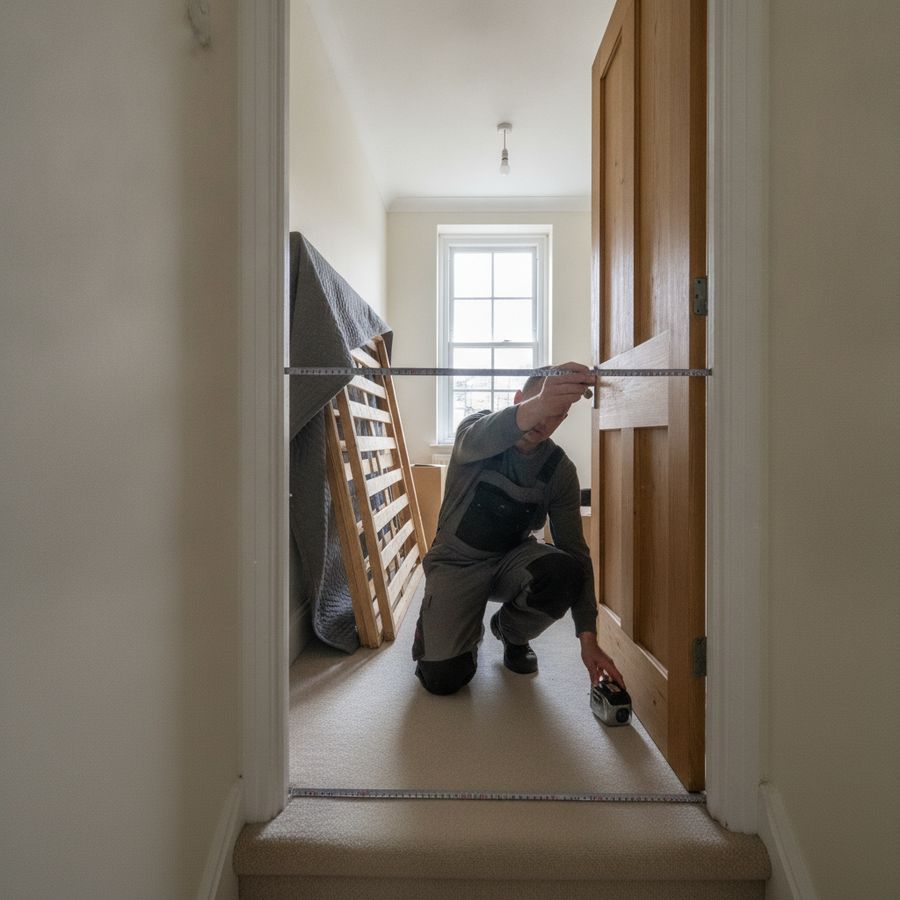
Measuring Alcoves Stairs and Doorways First
Even the right bed for the room can become the wrong purchase if it cannot get into the property. Before ordering, measure access points as carefully as the bedroom itself. That includes front doors, hallways, landings, stair turns, loft conversions, and narrow alcoves. This step is especially important when buying larger frames, tall headboards, or heavier storage styles.
Many modern beds arrive flat packed, which helps, but individual components can still be bulky. Long side rails, wide headboards, and ottoman bases may challenge tight staircases or awkward corners. If you are choosing between UK bed sizes, access can be the deciding factor between a double, king, or super king size model.
- Measure doorway width and height
- Check the tightest point on stairs and landings
- Note bannisters, ceiling angles, and turning space
- Measure alcoves where the bed will sit
Measure the route before you measure the dream layout, because a bed that cannot enter the room cannot improve it
This advice is useful for every buyer, but especially for anyone upgrading from a smaller frame. A reliable bed size guide should always include the journey into the home, not just the final position in the bedroom.