

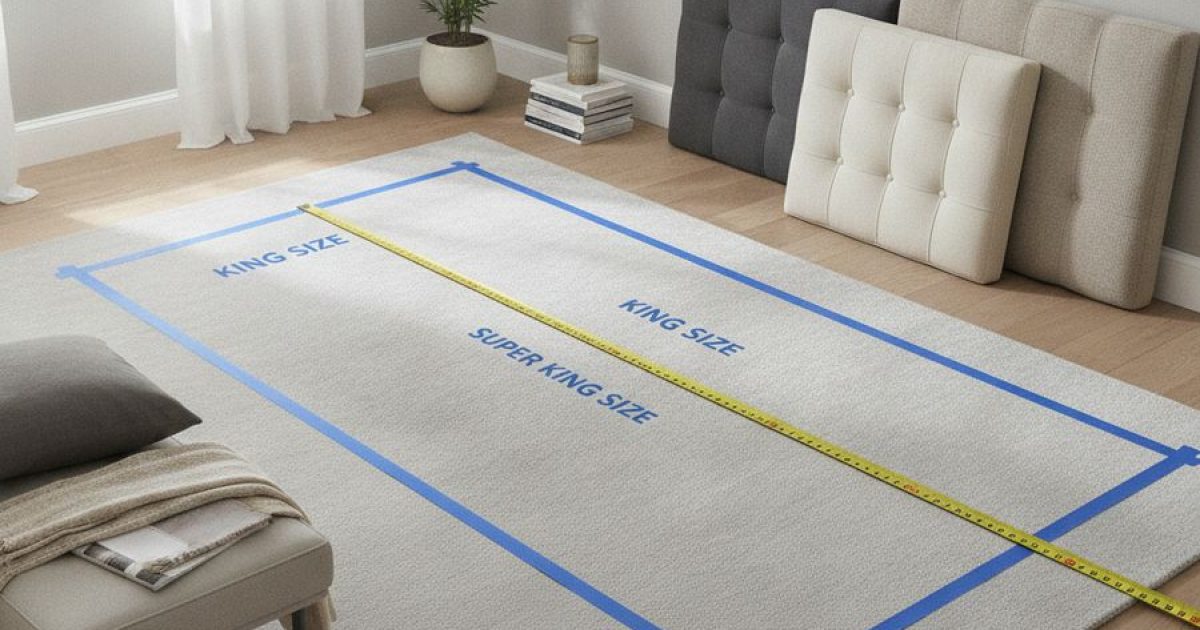

Exact Dimensions Prevent Expensive Fitting Mistakes
When comparing king or super king options, the most important starting point is the actual mattress platform size. In standard UK bed sizes, a king size is typically 150 x 200 cm, while super king dimensions are usually 180 x 200 cm. That extra 30 cm of width sounds modest on paper, but in a real bedroom it can change how the whole room feels and functions.
Many shoppers focus only on mattress width and forget that the full frame can extend beyond the mattress. Upholstered sides, winged headboards, footboards, or storage mechanisms can all add to the finished footprint. Some retailers also recommend a tolerance around the bed; for example, Harmony Beds notes allowing roughly +2 cm on every side according to mattress size. That small allowance matters when you are measuring alcoves, radiators, wardrobes, or bedside gaps.
Measure the full bed footprint, not just the mattress label, before you buy
Getting bed dimensions UK right at the beginning helps avoid return costs, awkward room layouts, and expensive redecorating. It also makes it easier to decide whether a spacious super king is truly practical or whether a king offers the smarter balance of comfort and fit.
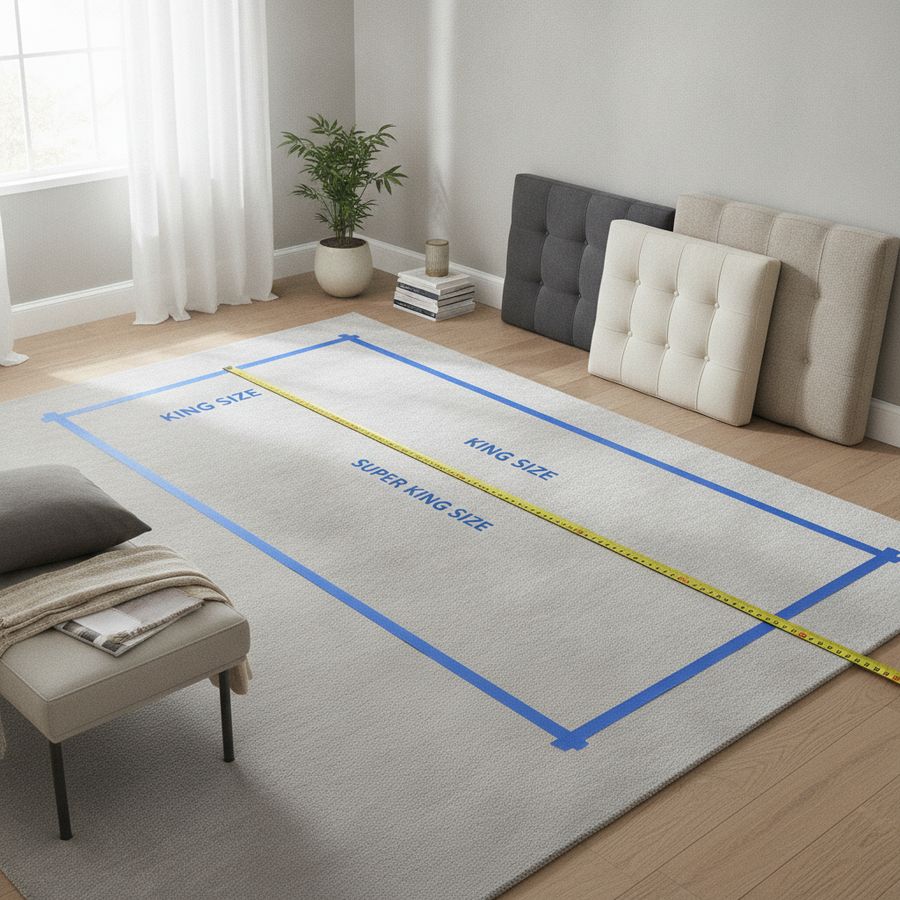
What Space Should Surround the Bed?
A bed does not need to fit only within the room; it needs to fit within your daily routine. For a bedroom to feel comfortable, you should leave enough clearance to walk around the frame, open drawers, and make the bed without twisting sideways. This is often where a king size fit becomes more realistic than a larger option.
As a practical rule, aim for comfortable circulation space on both sides and at the foot of the bed. Exact allowances vary by room and furniture placement, but these checkpoints help:
Enough side space for getting in and out easily
Clear room at the foot for dressing and changing linen
Extra allowance for bedside tables, lamps, and curtain movement
More depth if the bed has drawers or ottoman lift access
If the room is narrow, a super king can visually crowd the layout even if it technically fits wall to wall. That is why UK bed sizes should always be considered with walking space, not in isolation.
Comfort is about movement as well as mattress area. A bed that leaves the room usable often feels more luxurious than a larger frame that dominates every pathway.
Room Shape Changes Usable Floor Area
Floor measurements can be deceptive. Two bedrooms may have the same square metre total, yet only one may suit super king dimensions. The reason is simple: shape affects usable space more than buyers expect. Chimney breasts, sloped ceilings, bay windows, ensuite doors, and fitted wardrobes all reduce where the bed can actually sit.
A long rectangular room may handle a super king well if the width is generous. By contrast, a box room with awkward corners may struggle even with a standard king despite similar floor area. In these cases, the best approach is to map the bed position first, then check what remains for circulation and storage.
The widest bed is not always the best use of the room; the best layout is the one that still feels easy to live in
This matters especially for upholstered styles with statement headboards. Harmony Beds offers various headboard heights, including floor-standing designs, which can change visual balance in smaller rooms. A tall headboard may look elegant, but in a low-ceilinged or narrow bedroom it can make the space feel tighter.
When comparing king or super king, always think in three dimensions: width, length, and how the room shape frames the bed once everything else is in place.
Will a King Size Fit Comfortably?
For many households, the answer is yes. A standard UK king gives couples more personal space than a double while remaining easier to place in typical British bedrooms. At 150 x 200 cm, it often hits the sweet spot between sleeping comfort and everyday practicality. That is why king remains one of the most popular UK bed sizes.
If you are asking whether a king size fit will feel right, consider how you use the room beyond sleep. Do you need bedside tables on both sides? Do wardrobe doors swing open near the foot of the bed? Is there enough room to change bedding without pushing the frame hard against a wall? These practical details matter more than the label alone.
A king can be especially effective in rooms where you want a stronger sense of openness, or where you are choosing a bulkier upholstered frame or ottoman base. Storage beds are useful, but lift-up or drawer access still needs surrounding space to work well.
If a super king is the dream size, a king is often the smart size. It delivers a noticeable comfort upgrade without making the bedroom feel overfilled or awkward to move around in.
Doorways, Stairs, and Headboards Affect Delivery
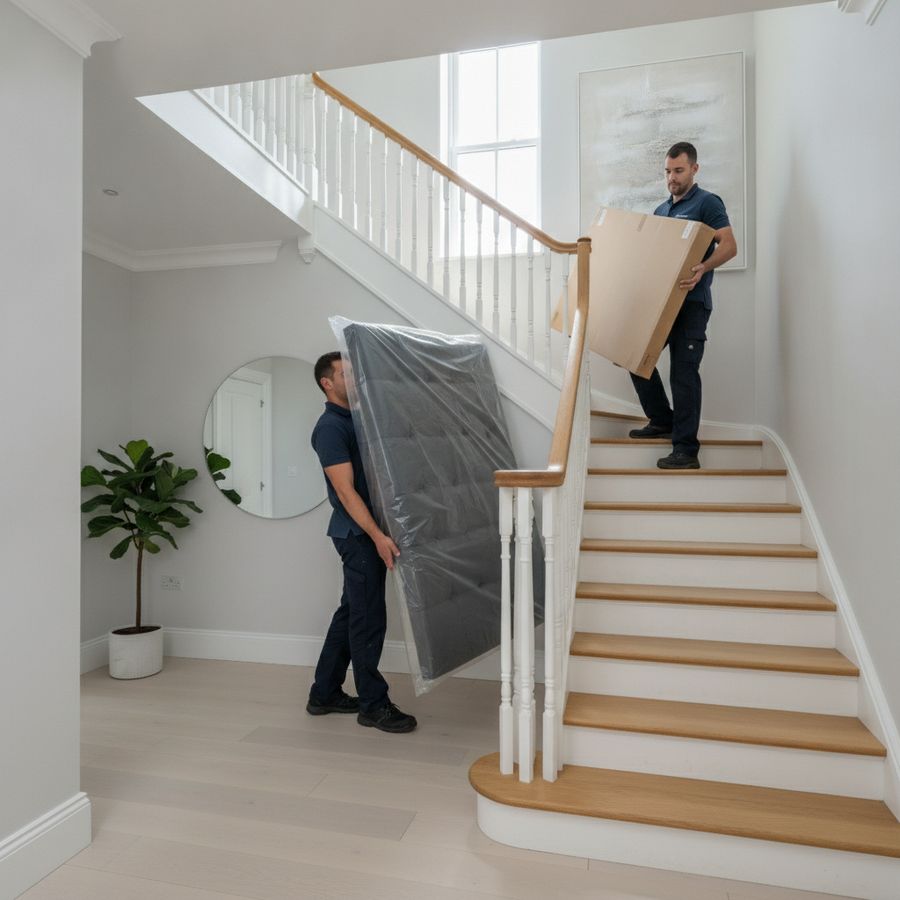
Choosing the right bed dimensions UK is not only about where the bed will stand. It is also about whether each part can get into the property at all. Narrow hallways, tight stair turns, loft conversions, and small landings can complicate delivery, particularly for large upholstered components and tall headboards.
This is why it helps to ask how the bed arrives. Harmony Beds states that its beds arrive flat packed, with optional assembly available, which can make larger sizes easier to manage through the home. Even so, shoppers should still measure:
Front door width and hallway turns
Stair width, bannisters, and ceiling height on corners
Landing space for manoeuvring long side rails
Headboard height and width, especially for floor-standing styles
Delivery access is particularly important when weighing up king or super king models with grand upholstered designs. A mattress may bend slightly in transit, but many bed components will not.
A bed can fit the bedroom perfectly and still fail at the staircase
Checking access in advance reduces stress, missed delivery charges, and the disappointment of discovering that the ideal frame cannot be brought into the room where it belongs.
When Extra Width Genuinely Improves Sleep
There are situations where a super king is more than a luxury upgrade. If two adults share a bed and one or both are restless sleepers, the additional width can reduce disturbance and create a calmer sleep environment. Families who occasionally have a child climb in early in the morning may also value the extra space. In those cases, super king dimensions can have a real quality-of-sleep benefit.
More width does enhance comfort, but only if the room remains functional. If a larger frame blocks access to windows, wardrobes, or bedside storage, the added stress can negate any comfort benefits. The ideal solution is a size that accommodates both restful sleep and your lifestyle. For options that balance comfort and functionality, check out Harmony Beds.
You may benefit from choosing a super king if:
You and your partner prefer generous personal sleeping space
One sleeper moves frequently during the night
Your bedroom comfortably accommodates the wider footprint
You want a more hotel-like sleep setup without sacrificing circulation space
The true test is balance. A king is often enough, but when the room is large and sleep disruption is a real issue, choosing king or super king becomes less about style and more about sleeping better night after night.
FAQs
What is the size difference between a UK king and a UK super king?
A standard UK king mattress is typically 150 x 200 cm, while a standard UK super king is 180 x 200 cm. The main difference is 30 cm of extra width, which can significantly affect room layout and walking space.
Should I measure the mattress size or the full bed frame?
Measure the full bed footprint, not just the mattress label. Headboards, side rails, footboards, upholstery, and storage features can all extend beyond the mattress dimensions.
How much space should I leave around a bed?
The article recommends leaving enough clearance on both sides and at the foot of the bed for daily movement, making the bed, opening drawers, and accessing bedside furniture. Exact spacing depends on the room shape and any surrounding wardrobes, radiators, or doors.
When is a super king worth choosing over a king?
A super king can be worth it when the bedroom comfortably supports the wider footprint and extra circulation space, especially for couples who want more personal sleeping room or experience sleep disturbance from movement.
Why do delivery access and stair measurements matter for large beds?
A bed can fit the bedroom but still be difficult to deliver if hallways, stairs, landings, or doorways are tight. Large upholstered parts and tall headboards may be harder to manoeuvre, so access measurements are important before ordering.