


Overview
Choosing between a foam mattress and a natural fibre mattress can feel confusing when you are trying to stay on budget. Both options appear in affordable ranges, but the filling inside has a major effect on mattress comfort, temperature control, support, and long-term value. That means the cheapest ticket price is not always the smartest buy.
Natural fillings usually include materials such as cotton, wool, silk, or cashmere, while synthetic options often use polyurethane foam, reflex foam, or memory foam. Each type of filling behaves differently under pressure and body heat, so the best choice depends on how you sleep rather than price alone.
Budget mattress shopping works best when you compare comfort, lifespan, and sleep temperature together instead of focusing only on upfront cost
For many UK shoppers, the goal is finding the best mattress fillings for everyday use without overspending. In this guide, we compare natural and foam-based mattress fillings in practical terms, helping you decide which option gives the best balance of affordability, comfort, and lasting performance.
Natural Fibres Versus Synthetic Foam Explained
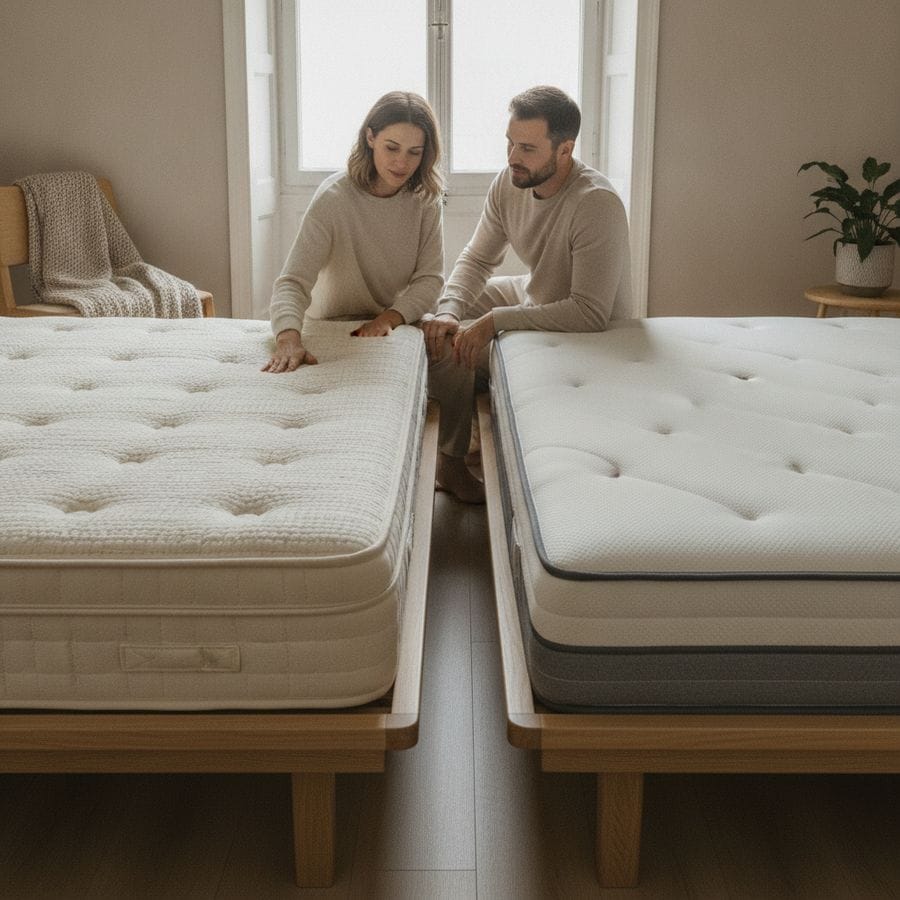
Natural fibre mattress fillings are made from breathable materials sourced from plants or animals. Common examples include wool, cotton, horsehair, silk, and bamboo blends. These fillings are often layered with springs to create a more traditional sleep surface with a responsive, lightly cushioned feel. They are valued for airflow and moisture control, which can improve comfort through the night.
By contrast, synthetic foam fillings are man-made and designed to contour, cushion, or stabilise the body. A standard foam mattress may contain reflex foam for firmer support or memory foam for deeper body shaping. Foam layers can create a more uniform feel and often appear in lower-cost mattresses because they are efficient to manufacture.
The main difference comes down to how the mattress reacts:
- Natural fibres tend to feel fresher, springier, and more breathable
- Foam fillings tend to feel closer, softer, and more pressure-relieving
- Blended mattresses often try to combine the benefits of both
Understanding these basics makes it easier to compare price tags with genuine performance, especially if your budget is limited.
Comfort Differences Between Popular Mattress Fillings
Comfort is highly personal, but different mattress fillings create noticeably different sensations. Memory foam is known for its body-hugging feel. It softens with warmth and pressure, which can reduce stress around the shoulders and hips. For side sleepers, this often feels luxurious. However, some people dislike the slower movement and the way foam can feel more enclosed.
Natural fillings create a different type of mattress comfort. Wool and cotton usually feel more buoyant and breathable, with less sink. Instead of moulding closely around the body, they provide a gentler cushioned layer above the support core. That can appeal to sleepers who prefer easier movement during the night.
The most comfortable mattress is not always the softest one — it is the one that keeps your body supported in your usual sleep position
If you are comparing popular options, think about how you want the surface to feel:
- Memory foam: contouring and pressure relieving
- Reflex foam: firmer and more supportive
- Wool or cotton fillings: breathable and lightly cushioned
Budget buyers should match comfort style to sleep habits first, then compare prices.
Which Filling Lasts Longer in Daily Use
Durability matters when you are shopping on a budget because replacing a poor mattress too soon costs more in the long run. In daily use, lifespan depends on filling quality, mattress construction, body weight, and how well the bed is maintained. Even so, some broad patterns are worth knowing.
High-quality natural fillings, especially wool-rich or mixed luxury fibres, can remain comfortable for years when properly supported and regularly rotated. They tend to recover well and maintain airflow, but lower-grade natural fillings can compress over time if there is not enough depth or structure underneath.
A foam mattress can also last well, but the foam density is crucial. Cheaper low-density foam may soften, dip, or lose support faster than expected. Better density foam usually performs more consistently, especially in the middle price range.
When judging value, filling density and build quality usually matter more than whether the label says natural or foam
For everyday family use, look for:
- Clear support and firmness information
- Decent mattress depth
- Rotation guidance from the manufacturer
- Materials that suit your weight and sleep pattern
A well-made mid-range model often beats an ultra-cheap option, whatever the filling type.
Best Mattress Fillings for Hot Sleepers
If you regularly wake up warm, the filling inside your mattress can make a significant difference. Many hot sleepers struggle with dense foam because it can hold onto body heat, especially in all-foam designs with minimal airflow. Some modern foams include cooling features, but budget models do not always manage temperature particularly well.
Natural fibres are often the stronger choice for heat control. Wool can regulate temperature across seasons, while cotton and other breathable layers help moisture disperse rather than build up around the body. That makes a natural fibre mattress especially appealing if you prefer a fresher, drier sleep surface.
When comparing the best mattress fillings for cooler sleep, consider these practical points:
- Wool blends for year-round temperature regulation
- Cotton layers for breathability and dryness
- Open-cell or gel foam if you still want contouring with less heat retention
Hot sleepers usually benefit more from breathable fillings and a supportive base than from ultra-soft, heat-trapping surfaces
If staying cool is a priority, natural fillings or hybrid mattresses often give better all-round mattress comfort than very cheap foam-heavy designs.

How Price Changes by Filling Type
Price differences between mattress types often reflect both material cost and manufacturing method. In general, entry-level foam mattresses are usually the cheapest option. They are widely available, simple to produce at scale, and often marketed as an affordable route to comfort. That makes them attractive for guest rooms, temporary setups, or first homes.
Natural fillings usually cost more because the materials are more expensive and the construction can be more layered. A mattress with wool, cotton, or premium fibre blends may sit in the mid-range or above, even before you move into luxury models. However, higher price does not automatically mean better value for every sleeper.
Budget shoppers should think in terms of cost over time, not just starting price. A cheap foam mattress that loses support quickly may work out more expensive than a slightly pricier model that lasts several years longer.
The best-value mattress is the one that balances purchase price, nightly comfort, and useful lifespan
Also remember that support systems, cover quality, and mattress depth all affect price. When comparing mattress fillings, try to judge the whole build rather than the filling label alone.
Value Picks for Different Sleep Styles
The right filling often depends on how you sleep. Side sleepers usually need pressure relief at the shoulders and hips, so a memory foam mattress or a hybrid with softer comfort layers can offer strong value. Back sleepers often do well with firmer reflex foam or balanced natural fillings that support the spine without too much sink.
Front sleepers generally need a flatter, more supportive surface to avoid dipping through the middle. In many cases, a firmer foam or spring mattress with modest natural upholstery will feel better than a deep, plush top. Combination sleepers, who change position often, may prefer breathable natural layers because they make movement easier.
Here is a simple way to match the best mattress fillings to sleep style on a budget:
- Side sleepers: memory foam or soft hybrid comfort layers
- Back sleepers: medium-firm reflex foam or wool-blend support
- Front sleepers: firmer, less sink-heavy fillings
- Hot sleepers: natural fibres or cooler hybrid builds
The smartest buy is the one that matches your body and habits. Good mattress comfort comes from suitable support, not simply from choosing the most expensive filling.
Conclusion
When comparing natural and foam-based mattress fillings on a budget, there is no single winner for everyone. A foam mattress often gives the lowest upfront price and can provide excellent pressure relief, especially for side sleepers. Natural fillings usually cost more, but they often deliver better breathability, a fresher feel, and strong long-term comfort for people who sleep warm or prefer a more traditional surface.
The best decision comes from balancing four things: your sleep position, temperature needs, comfort preference, and realistic budget. If you want close contouring and lower initial cost, foam may suit you well. If you want airflow, easier movement, and a more breathable finish, a natural fibre mattress may be the better investment.
The best mattress fillings are the ones that support your body properly and stay comfortable night after night
Take time to compare construction, not just marketing terms. For budget-conscious buyers, a well-made mattress with the right filling mix can offer far better value than the cheapest option on the page. Comfort that lasts is always worth choosing carefully.