



When it comes to maximizing bedroom space, choosing the right bed can make all the difference. What is a divan? This question often arises as homeowners search for storage solutions that don’t sacrifice style or comfort. Divans and ottoman beds represent two popular space-saving options, each with distinct advantages for different living situations. While both offer hidden storage capabilities, they function in fundamentally different ways. Divan beds typically feature drawer compartments built into their base, whereas ottoman beds lift to reveal a full storage area underneath. For anyone dealing with limited square footage or simply wanting to reduce clutter, understanding these differences is essential. Whether you’re furnishing a compact city apartment or reorganizing your master bedroom, the choice between these two bed types will affect not just how your room looks, but also how it functions. Let’s explore which option might be the perfect fit for your space and lifestyle needs.
Understanding the Bed Types
Both divan and ottoman beds offer smart storage solutions, yet their designs serve different needs and preferences. Let’s examine their unique construction and functionality.
What is a Divan Bed?
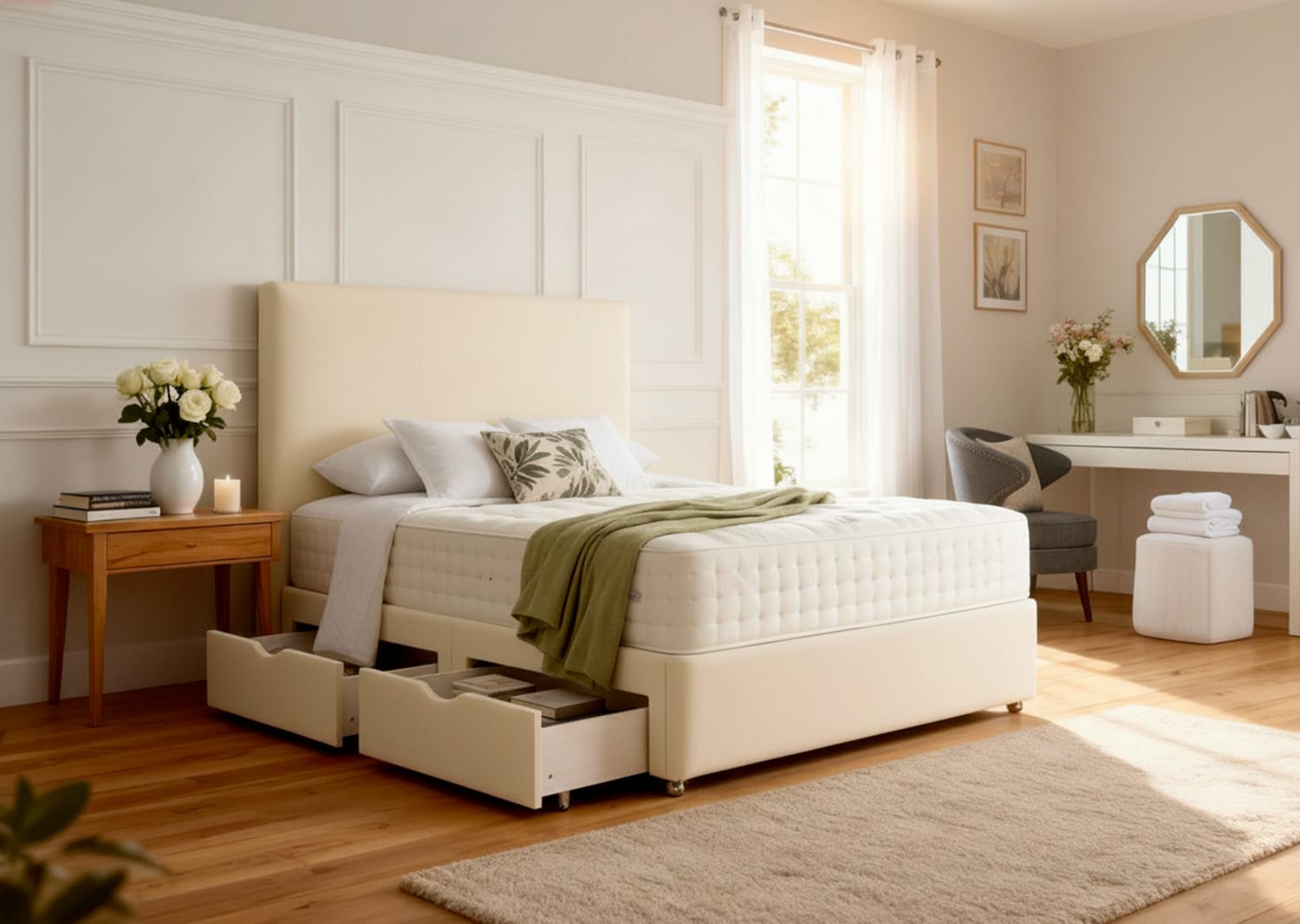
A divan bed consists of a solid base sitting directly on the floor with a mattress positioned on top. Essentially, the base is constructed from a wooden frame (typically MDF or other sturdy woods) covered in fabric upholstery. Unlike traditional bed frames with visible legs, divan bases extend completely to the floor, creating a clean, box-like appearance.
Most divan beds are manufactured in sections – generally two parts for easy transportation and assembly. These sections connect securely to form a stable platform that supports the mattress. The base typically sits on small castors or wheels that allow for movement when cleaning.
Divan beds come in two main base types:
- Platform top: Features a rigid, non-sprung panel for firmer support
- Sprung top: Includes small springs inside the base that add extra bounce and comfort
Storage is a primary advantage of divan beds, with several configuration options available. Standard divans offer two to four drawers built into the sides, while continental drawers provide smaller storage compartments that work effectively in tight spaces. Some models combine both drawer styles based on room layout requirements.
What is an Ottoman Bed?
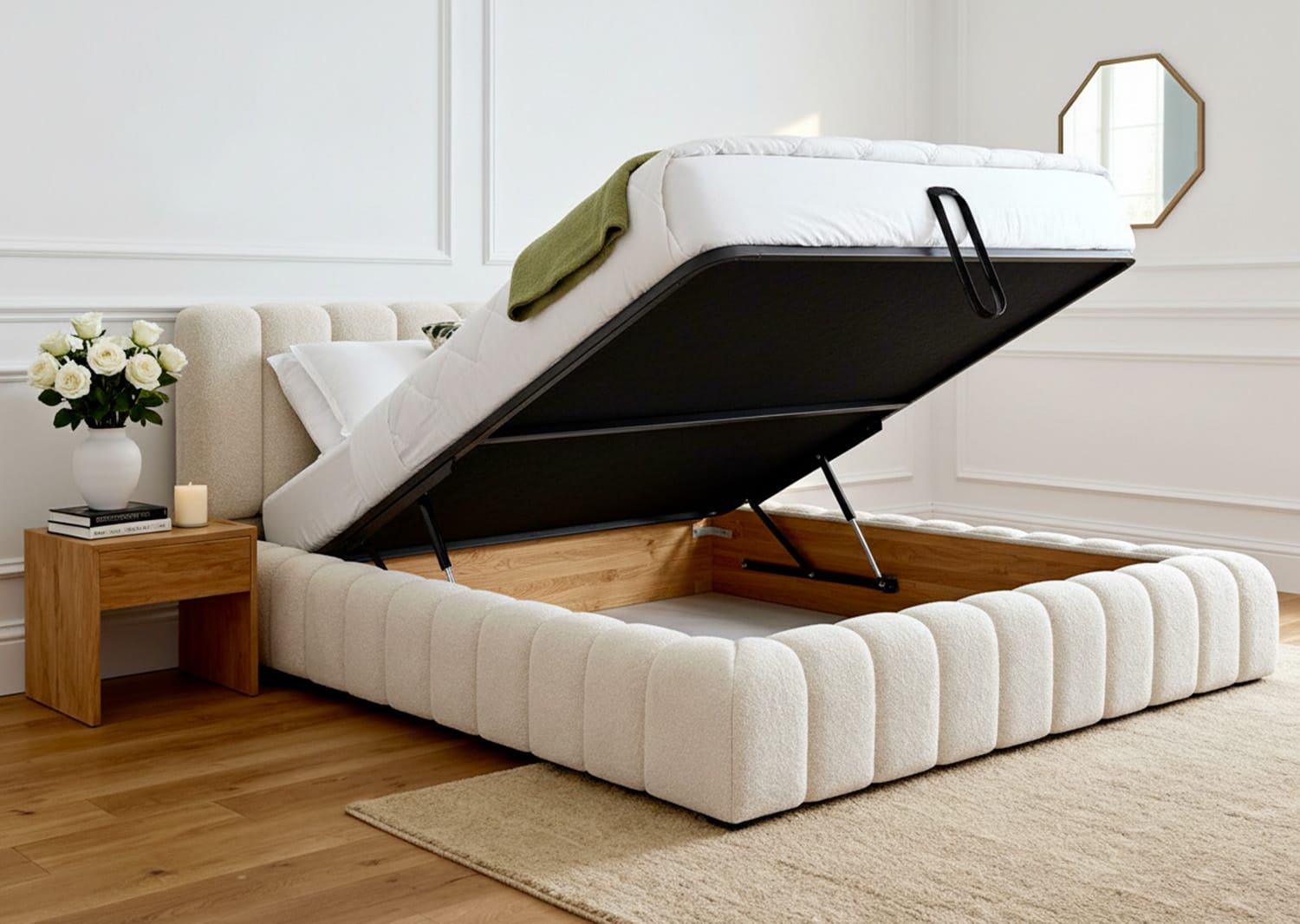
An ottoman bed features a lift-up storage mechanism that raises the entire mattress to reveal a spacious storage compartment underneath. This design traces its origins to the Ottoman Empire, where furniture frequently incorporated hidden storage elements.
The defining feature of ottoman beds is their hydraulic lift system. These beds employ gas pistons (resembling bike pumps) positioned on either side that produce a smooth, controlled lifting action. This mechanism makes raising and lowering the mattress – even heavy ones – relatively effortless.
Unlike drawer-based storage, ottoman beds utilize the entire underside volume as one large compartment. This design allows for storing bulkier items such as bedding, clothing, or seasonal items out of sight. Additionally, ottoman beds frequently include integrated headboards, creating a cohesive furniture piece.
How They Differ Structurally
The fundamental structural difference between these bed types lies in their storage access method. Divans feature horizontal drawers that pull out from the sides, whereas ottomans utilize a vertical lifting mechanism.
Divans generally provide sturdier support, particularly for heavier individuals. With their solid construction and weight distribution design, quality divan beds can typically support around 50 stone (approximately 700 pounds) for two people, or 30 stone (approximately 420 pounds) for individuals.
Furthermore, divan beds often feature two-part construction that simplifies delivery and installation in tight spaces. Ottoman beds, conversely, usually come as complete units that may present challenges in narrower doorways or staircases.
The storage capacity differs significantly between the two designs. Ottoman beds maximize storage volume by utilizing the entire underbed space, making them ideal for storing larger items. Alternatively, divan drawers compartmentalize storage, allowing for better organization of smaller items with easier daily access.
Another distinction involves floor clearance requirements – divan drawers need sufficient side space to open fully, while ottoman beds require vertical clearance for the lifting mechanism to operate properly.
Storage Capacity and Access
Storage capacity often becomes the deciding factor for many shoppers comparing divan and ottoman beds. Each design offers distinct advantages for specific storage needs, making it crucial to understand their differences before purchasing.
Storage Volume: Full Base vs Drawer Compartments
The fundamental difference in storage capacity lies in how each bed utilizes the underbed space. Ottoman beds maximize storage by employing the entire base area as one large compartment. This design can provide up to 1000 liters of storage space, creating ample room for bulkier items. Comparatively, divan beds offer more limited storage through built-in drawers that occupy only part of the bed base.
For perspective, the storage volume in a standard double ottoman bed equals roughly a small wardrobe or large chest of drawers. This makes ottoman beds particularly valuable in smaller bedrooms where additional furniture might overcrowd the space.
Divan beds typically offer several drawer configurations:
- None (solid base with no storage)
- Two standard drawers
- Two standard plus two continental drawers
- Four standard drawers
The compartmentalized nature of divan drawers means they cannot accommodate larger items that might easily fit within an ottoman’s single cavity storage.
Access Mechanism: Gas-Lift vs Pull-Out Drawers
The access methods for these bed types couldn’t be more different. Ottoman beds employ hydraulic or gas-lift mechanisms that assist in raising the entire mattress platform, revealing the storage area underneath. This piston-assisted system makes lifting relatively effortless, even with a heavy mattress in place.
Divan beds, alternatively, feature straightforward pull-out drawers that slide out horizontally from the sides or foot of the bed. This simple mechanism requires no lifting whatsoever—simply pull to open and push to close.
Each system has practical implications. The ottoman’s lift mechanism stays raised while you organize or retrieve items, eliminating the need for bending or squeezing. However, accessing an ottoman’s storage requires lifting the entire bed surface, which despite hydraulic assistance, still demands some physical effort.
Ease of Use in Daily Life
The practical considerations of daily use often influence which bed type suits your lifestyle. For items accessed frequently throughout the week, divan drawers prove more convenient. You can quickly retrieve daily essentials without disrupting the bed itself.
Moreover, divan drawers offer a significant advantage for couples or families—you can access the storage even if someone is sleeping on the bed. This feature makes divans preferable for households with children or anyone with mobility limitations.
Ottoman beds, on the other hand, excel at storing items used occasionally rather than daily. Winter duvets, seasonal clothing, or spare bedding that doesn’t require regular access find their ideal home in an ottoman’s spacious compartment. Furthermore, with proper organization using storage boxes, you can create a system that maximizes this large space while keeping items easily retrievable.
The choice ultimately depends on your specific needs. If you require frequent access to stored items, especially smaller ones used daily, divan beds offer superior convenience. Conversely, if you need maximum storage for bulkier, less frequently used items, ottoman beds provide the optimal solution.
Room Fit and Space Efficiency
Bedroom dimensions play a crucial role when choosing between divan and ottoman beds. For many homeowners, finding furniture that maximizes limited space without compromising functionality remains a top priority. Both bed types offer clever storage solutions, yet their spatial requirements differ significantly.
Which Bed Works Better in Small Rooms?
Ottoman beds typically outperform divans in compact spaces. These beds can offer up to four times more storage than drawer-based alternatives, making them ideal for small UK bedrooms. The ottoman’s design eliminates the need for excess furniture by combining sleeping and storage solutions in one structure.
Divan beds excel at minimizing their footprint in the room. Since they match the dimensions of your mattress precisely, the frame doesn’t extend beyond it, preserving valuable floor space. This compact profile makes divans particularly suitable for bedrooms where every inch counts.
For extremely tight spaces, the decision often comes down to access method. Side-opening ottoman beds work exceptionally well when pushed against a wall, as they still provide full storage access from the open side. This flexibility gives ottomans an edge in awkwardly shaped rooms or spaces with limited clearance.
Clearance Requirements: Side vs Vertical Access
Each bed type demands different clearance considerations:
- Divan beds require at least 24 inches of clearance on sides with drawers and 36 inches at the foot end for comfortable access [11]. Without this space, drawers cannot fully extend, reducing their practicality.
- Ottoman beds need sufficient vertical clearance to accommodate the lifted mattress. This means checking that there’s enough space between a fully opened ottoman bed and the ceiling to avoid damage.
In contrast to divan drawers that slide out horizontally, ottoman beds utilize vertical space through their lifting mechanism. This fundamental difference makes ottomans more suitable for narrow rooms where side clearance is limited. Yet, rooms with low ceilings might better accommodate divans, as they don’t require the same overhead space.
Ideal Layouts for Each Bed Type
For optimal room arrangement, position divan beds against the longest wall, away from the door whenever possible. This creates a focal point while preserving pathways for movement. Given that divans need drawer clearance, avoid placing them in corners or tight spaces where access becomes restricted.
Ottoman beds offer greater flexibility in placement. End-lift ottomans work best in larger rooms or spaces that can’t accommodate drawers opening along the side. Meanwhile, side-lift models prove perfect for pushing against walls, as they require clearance on only one side.
A typical storage bed eliminates the need for at least one dresser (which usually occupies 12-16 square feet), allowing for better room flow and more open space. This space-saving advantage becomes particularly valuable in studio apartments or multipurpose rooms.
When planning your layout, create a floor plan or mark the bed position with tape to visualize traffic flow. For divans, ensure drawer access remains unobstructed by other furniture. With ottomans, verify that the lifting mechanism can operate freely without hitting ceiling fixtures or sloped walls.
Ultimately, the ideal choice depends on your specific room constraints. Ottoman beds maximize storage in vertically generous spaces with limited floor area, whereas divans function better in rooms with ample side clearance but height limitations.
Design, Comfort, and Esthetics
Beyond function and storage, the esthetic appeal and comfort of your bed greatly influence your bedroom’s atmosphere. Design elements play a crucial role in determining which option—divan or ottoman—better suits your personal style and sleep preferences.
Visual Appeal: Modern vs Classic Styles
Ottoman beds embody sleek, modern designs that fit perfectly with contemporary interiors. Their streamlined appearance creates a sophisticated statement piece that complements minimalist bedrooms without sacrificing practicality. The clean lines and seamless construction make ottoman beds particularly appealing for those seeking a current esthetic.
Divan beds, in comparison, tend to offer a more classic and timeless appeal. Their upholstered sides and footboards create a softer visual impression that works well with traditional décor schemes. Fundamentally, divans present a clean and minimalist esthetic due to their compact dimensions that match the mattress size exactly. This low-profile appearance makes them ideal for creating a contemporary feel in bedrooms focused on simplicity.
Headboard and Upholstery Options
Both bed types can be dramatically transformed through fabric selection and headboard choices. For ottoman beds, three main headboard styles are available—upholstered, metal, and wooden. Upholstered options bring luxurious comfort, metal headboards offer simple elegance, and wooden versions provide traditional charm.
Divans commonly include the option for a matching headboard, creating a cohesive look throughout the bedroom. These headboards typically attach directly to the divan base through brackets or struts. According to experts, adding a headboard to a divan bed not only enhances comfort but simultaneously protects walls from marks and scratches.
The upholstery fabric selection affects both appearance and durability. Common options include:
- Velvet – Offers rich, deep colors and luxurious texture
- Linen – Provides a natural, relaxed appearance
- Flat weave – Delivers versatility in patterns and colors
- Leather – Creates a timeless, sophisticated look
Comfort Levels: Platform Top vs Sprung Base
The internal construction of divan beds significantly impacts comfort. Platform top divans feature a rigid, non-sprung panel that delivers firmer support. This solid construction ensures minimal flexing, creating a more predictable sleep surface. Platform tops typically appeal to those needing substantial orthopedic support.
In contrast, sprung edge divans represent a more luxurious option by incorporating a complete spring unit mounted on the frame. This system acts like a giant shock absorber, extending mattress durability and providing additional cushioning. The springs effectively absorb pressure and movement, creating a more responsive sleeping experience.
For those with joint issues or anyone seeking a plush sleeping surface, sprung edge divans typically offer superior comfort. Meanwhile, platform tops excel at providing the sturdy, firm foundation that some sleepers require. Both ottoman and divan bases can be constructed with either platform or sprung designs, although platform construction remains more common in ottoman beds.
Price, Durability, and Maintenance
Budget considerations often shape our furniture choices. The investment required for these storage beds varies considerably based on design complexity and features.
Cost Comparison: Budget to Premium Ranges
Financial implications differ markedly between these bed types. Ottoman beds typically cost 15-25% more than comparable divan models because of their hydraulic lift mechanisms. For budget shoppers, divan beds represent the economical choice, with prices ranging from £150 to £400 depending on storage configuration. In contrast, ottoman beds start around £250 for basic models, with premium upholstered versions reaching beyond £600.
Longevity and Frame Strength
Quality matters tremendously for durability. A well-constructed divan can serve faithfully for 15+ years, whereas properly maintained ottoman beds typically last around 10 years. The critical weakness in ottoman construction lies in the hydraulic lifting mechanism, which requires periodic inspection. Notably, plastic components should be avoided – quality metal struts significantly extend an ottoman’s lifespan.
Ease of Assembly and Cleaning
Divan beds arrive as two pre-made box sections, making them straightforward to assemble. Conversely, ottoman beds demand more effort, typically requiring 1-2 hours to construct. Regarding maintenance, divans present cleaning challenges as they sit extremely close to the floor. Ottoman beds need less underneath cleaning but require regular attention to their storage compartment to prevent dust accumulation.
Conclusion
Choosing between a divan and ottoman bed ultimately depends on your specific needs, room constraints, and lifestyle priorities. Both options offer practical storage solutions while serving their primary purpose as comfortable sleeping spaces.
Ottoman beds excel in maximizing storage capacity, particularly for those with smaller bedrooms or limited closet space. Their full-base design provides significantly more volume for storing bulkier items like winter bedding or seasonal clothing. Additionally, side-opening ottomans work remarkably well against walls, making them ideal for compact or awkwardly shaped rooms.
Divan beds, conversely, shine when it comes to daily access and practicality. Their drawer-based storage allows retrieval of items without disturbing someone resting on the bed. This feature makes divans especially suitable for families, couples, or anyone with mobility limitations. Furthermore, divans typically cost less than comparable ottoman models while offering greater durability, often lasting 15+ years with proper care.
Style preferences also factor heavily into this decision. Ottoman beds tend to complement modern, contemporary interiors with their sleek profiles and clean lines. Divans, on the other hand, offer timeless appeal that works beautifully with both traditional and minimalist bedroom designs.
For those prioritizing comfort, the choice between platform top and sprung base construction deserves careful consideration. Platform tops deliver firmer support for sleepers needing orthopedic benefits, whereas sprung bases provide extra cushioning and shock absorption that extends mattress life.
Before making your final decision, assess your bedroom dimensions carefully. Divans require sufficient side clearance for drawer access, while ottomans need adequate vertical space for their lifting mechanisms. Essentially, your room configuration might naturally favor one design over the other.
Regardless of which option you select, both bed types represent smart investments that combine functionality with style. By understanding the distinct advantages of divan and ottoman designs, you can confidently choose the perfect space-saving solution for your bedroom.